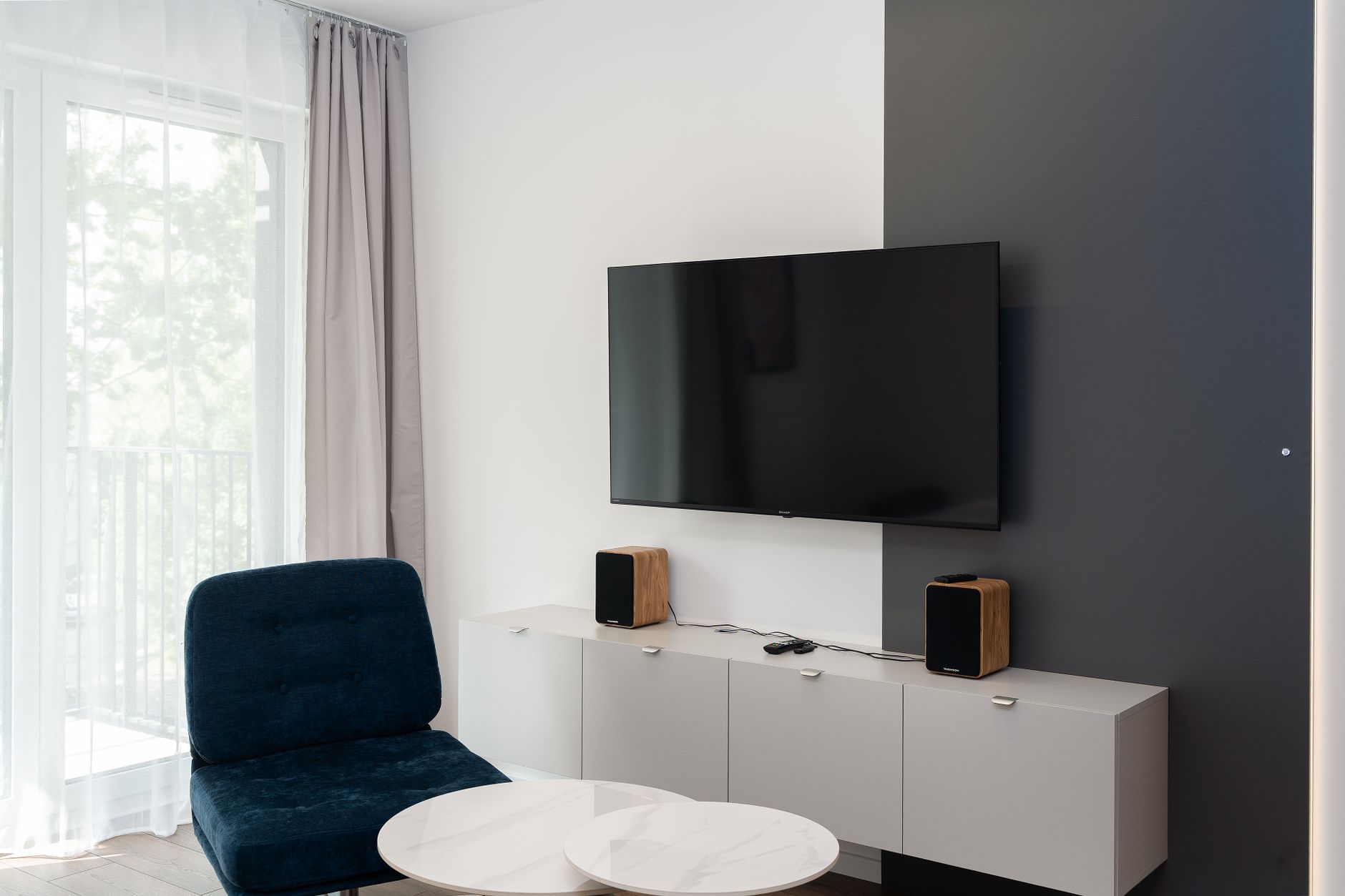
The average modern entertainment unit measures between 40 and 50 cm deep, yet most buyers overlook this crucial detail. They focus on the finish, door style, and color instead. Then they go to set up the TV, and suddenly there’s no way to run those HDMI cables without risking damage, or the unit blocks the wall-mount bracket completely. It’s a common mistake, but catch it early and it’s easy to fix before you hit “order.”
The furniture industry doesn’t help much with all this. Product listings tend to showcase photos rather than specs. Plus, when entertainment units are organized by style instead of by functionality, you can spend ages browsing without seeing important measurements. This guide flips that on its head.
What is a modern entertainment unit?
At its core, a modern entertainment unit is simply a low, horizontal cabinet designed to support a TV and hold AV components at a convenient eye level. That’s really it. The “modern” label usually suggests clean lines and sleek finishes, but that doesn’t guarantee it’ll work for your setup.
Wall-mounted or floating units have gained popularity in recent years, and they do look great. But expect to pay 20 to 35% more than for similar-sized floor-standing models due to the wall rail system and the engineering needed to secure them properly. If you’re renting, those costs jump even higher when you factor in professional installation and the need to patch the walls when you move. Floor-standing units aren’t a fallback; they’re just a different solution entirely.
Low-profile units—those under 40 cm in height—work best when your TV is mounted above 120 cm from the ground. Otherwise, a taller cabinet can force your viewing angle to be uncomfortably high. Most folks don’t measure this before buying and then wonder why their necks hurt after movie night.
Sizing and cable management
Width is generally where folks begin, and a good rule of thumb is a 2:3 ratio: your unit should be about two-thirds the width of your TV screen (measured diagonally and converted to the actual screen width). For instance, a 75-inch TV has a screen width of about 166 cm, so you’re looking at a minimum of 110 cm for the unit. Going wider looks good; going narrower can make the TV seem precarious, especially if it’s wall-mounted.
Depth, however, plays a bigger role in functionality. If you’re using a soundbar or AV receiver, remember that a standard AV component is 44 mm tall (that’s the 1U rack unit that the AV industry sticks to). Stack three components and you’ve used up 132 mm of the internal shelf height already. Always check the internal clearance of any unit you’re considering, not just its external height.
When you mount TVs, you’ll need at least 5 cm of clearance between the back of the unit and your wall. Many VESA brackets need space to tilt or swivel, and even fixed mounts require cable access. While floating units installed flush against the wall may look sleek, they can entrap cables and make future access a hassle. I’d recommend aiming for 8 to 10 cm for better airflow and ease of access.
Cable management is where cheaper units can falter. Look for pre-drilled cable ports instead of just gaps, and ensure the port is close to your power source. If there’s a port on the left side but your wall outlet is on the right, that won’t do you much good.
Materials and budget considerations
Most entertainment units in the $400 to $1,200 AUD range are made of MDF with a veneer or laminate finish. That’s not necessarily bad—MDF tends to be stable, handles paint and laminate well, and doesn’t warp with humidity like solid wood. The catch? Edge quality and joinery. Inexpensive MDF units often expose chipboard edges on the interior shelves, which can chip after a few component swaps. If you can, it’s worth inspecting them in person.
Solid timber units usually cost between $300 to $800 AUD more than similar MDF options. However, they offer better longevity and provide a more pleasant feel. If you scratch the surface, you can sand and refinish them. Whether it’s worth opting for timber depends on how long you plan to keep it and how rough your household is. Personally, I’d lean towards solid timber for a permanent lounge setup but go with MDF for a rental or a space that may need to change.
Powder-coated steel frames are common with floating designs and generally hold up well, but always check if the weight rating matches your components. Some rails might only support 30 kg, which can disappear quickly with a heavy soundbar. Also, matte finishes tend to hide dust better than gloss ones in everyday life, which is a bigger deal than many people realize.
Before you buy
Measure your wall space, the width of your TV, and the depth from the wall to the point where you want the unit’s front edge to sit. Double-check your VESA bracket clearance and see if the unit’s depth works with it. A modern entertainment unit that looks perfect but blocks your wall bracket or hides your cables isn’t right, no matter how stylish it looks. Get those numbers first, and then focus on finish.
FAQs
What is the standard height for a modern entertainment unit?
Most units stand between 40 and 55 cm tall. Units under 40 cm work better when the TV is mounted above 120 cm from the floor.
How wide should an entertainment unit be compared to the TV?
Stick with a 2:3 ratio: the unit should be about two-thirds the actual screen width of your TV for a comfortable minimum.
Is floating or floor-standing better for a modern living room?
Floating units cost 20 to 35% more and need wall access. Floor-standing models are simpler to install and just as functional for most setups.

4 Comments