Last summer, I helped my friend pick out a glass entertainment center for her newly renovated living room. We tested several options before landing on a sleek piece that showed off her gadgets without making the room feel cluttered. It was a better process than I expected, honestly.
Glass entertainment centers have become a go-to for homeowners who want something modern but adaptable. I’ll cover the key features, price ranges, maintenance, and a few things I wish we’d known earlier.
Key Features of Glass Centers
Most glass entertainment center models run between 60 and 80 inches wide, which comfortably fits TVs up to 65 inches. Weight capacity matters more than people realize: look for at least 150 to 200 lbs, since a TV plus a soundbar and a couple of consoles adds up fast. My friend nearly overlooked this detail.
Adjustable shelves are worth paying for. They let you reconfigure the layout as your setup changes, and your setup will change. Cable management cutouts are another feature I’d prioritize, because loose wires behind glass look twice as messy as they do behind a wood panel.
Price Trends and Options
When shopping for a glass entertainment center, you’ll find prices spread across a wide range. Budget-friendly brands like Furinno start around $200, while mid-tier options from Walker Edison or Sauder typically land between $500 and $1,000. Premium models with thicker tempered glass and metal frames can push past $1,500.
- $200-$500: Basic models, simpler designs, fewer adjustable features.
- $500-$1,000: Better materials, more customization options.
- $1,000-$2,000: High-quality glass, sturdier frames, refined finishes.
My friend spent around $750, which felt like the sweet spot. She got solid build quality without paying for finishes she didn’t care about.
Maintenance and Care Tips
Glass looks great right up until it doesn’t, and fingerprints show up fast. A quick wipe with a microfiber cloth once a week keeps surfaces clear without much effort. For deeper cleaning, a water-and-vinegar mix works fine. Skip the abrasive sprays, since they’ll dull the surface over time.
Be honest about weight when placing items on the shelves. Glass shelves flex under uneven loads in ways that wood shelves don’t, so centering heavier components matters. With reasonable care, a good glass entertainment center holds up for years.
Popular Design Styles
The three styles you’ll keep running into are modern, minimalist, and traditional.
- Modern: Sleek lines, metal frames, high-contrast finishes.
- Minimalist: Simple shapes, no decorative hardware, clean overall look.
- Traditional: Glass panels set into wood frames, warmer and more ornate.
Traditional is less common in this category, and I’ll be honest, it can look a bit awkward if the glass proportion isn’t right. Modern and minimalist are easier to make work across different rooms.
Choosing the Right Size
Measure twice before you buy anything. The width of your glass entertainment center should fit the TV with room on either side for components, not just the screen. A lot of people measure for the TV and forget the soundbar sitting beside it.
Leave clearance for ventilation behind the unit too. A center that crowds the wall traps heat around electronics. And in a smaller room, a piece over 70 inches wide can dominate the space in a way that feels uncomfortable to live with.
The Versatile Appeal of Glass Centers
What I actually like about a glass entertainment center is that it doesn’t impose on the room. Wood pieces anchor a space; glass kind of floats in it. That quality makes them useful in smaller rooms where a heavy-looking piece would close things in.
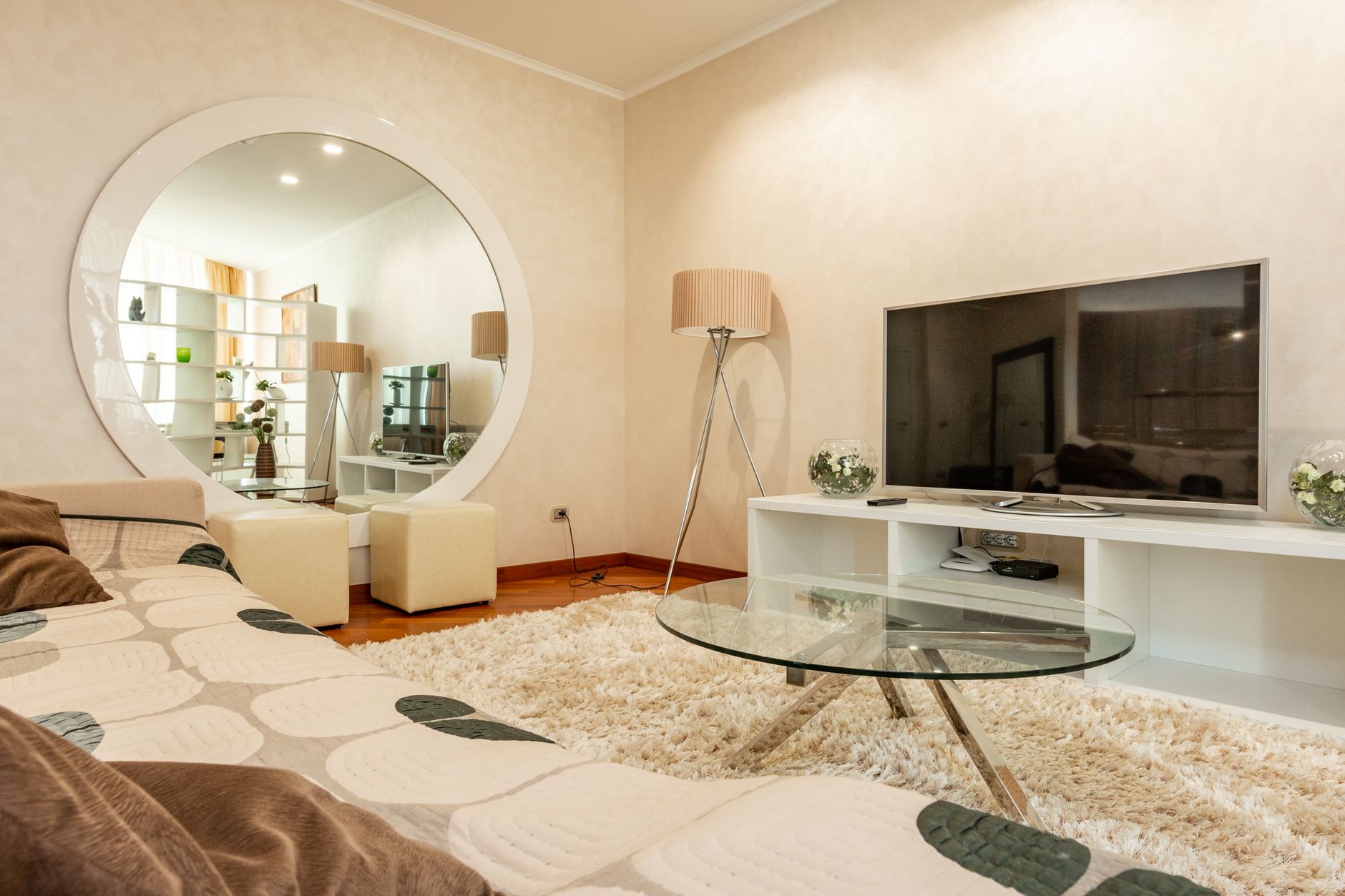
They also adapt to color changes reasonably well. When my friend repainted her walls from gray to a warm cream, the unit still worked. A dark walnut cabinet might not have. That flexibility (well, mostly flexibility) is what makes them worth considering even if glass isn’t your first instinct.
Is a Glass Center Right for You?
If you want something that feels open, shows off your decor, and doesn’t lock you into one design direction, a glass entertainment center is a solid choice. Budget around $500 to $800 for something that’ll last, get adjustable shelves, and check the weight rating before you order. Those three things will save you from most of the common regrets.
FAQs
What are the benefits of a glass entertainment center?
Glass keeps rooms feeling open, shows off decor well, and adapts to more color schemes than wood. It’s also lighter and easier to move.
How much does a glass entertainment center cost?
Expect to spend $200 to $2,000 depending on brand, glass quality, and features. Most solid mid-range options land between $500 and $1,000.
What styles do glass entertainment centers come in?
Modern, minimalist, and traditional are the main styles. Modern and minimalist are the most common and easiest to fit into different rooms.