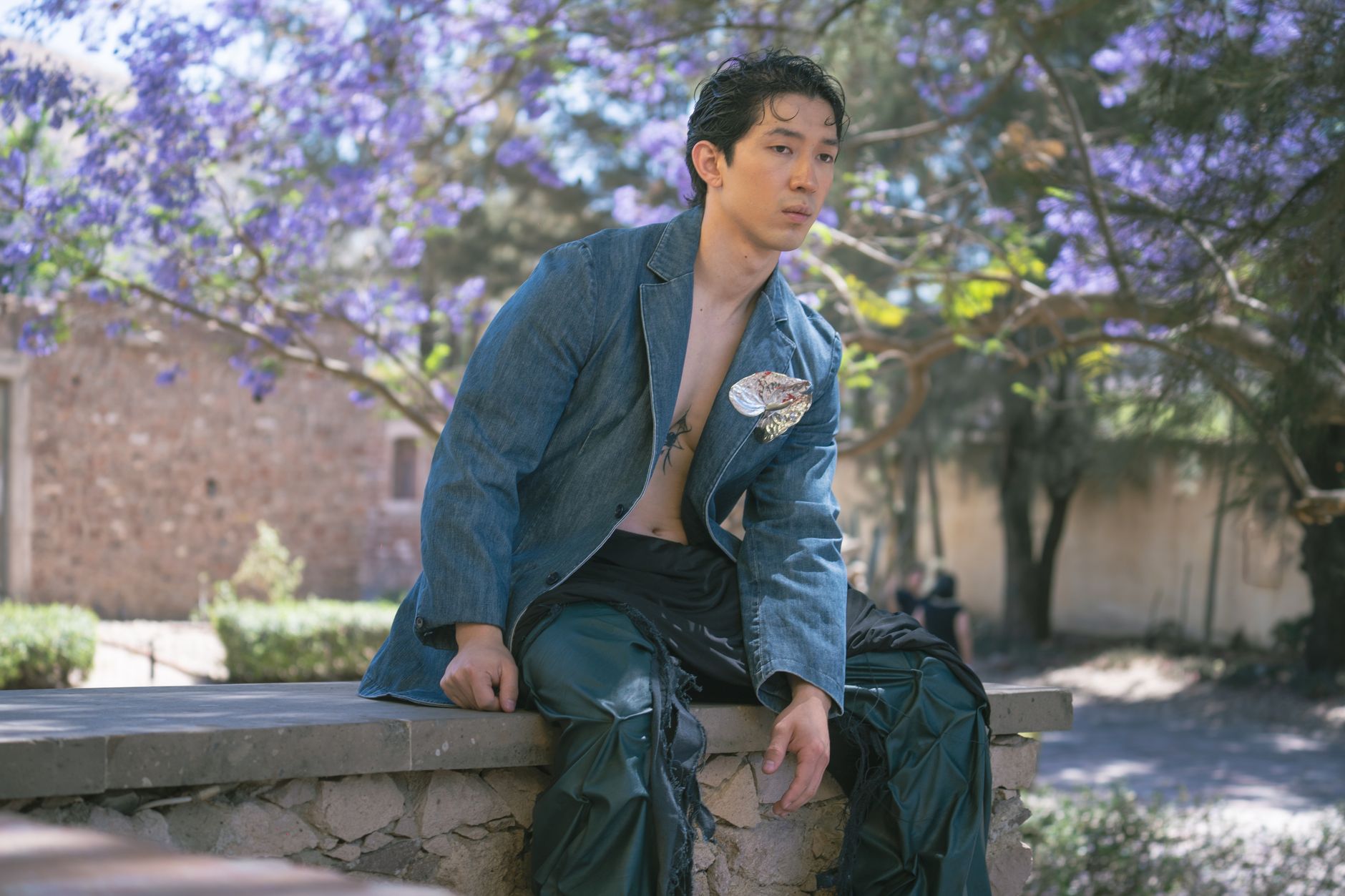
The japanese fashion men’s market sits at roughly $25 billion, which still catches people off guard. Most assume it’s a niche subculture, not a serious industry that outpaces the entire apparel sectors of several European countries. And Japan didn’t get there by chasing Western trends. It built its own logic, its own archetypes, and then quietly exported them everywhere from Seoul to Stockholm.
What makes the Japanese approach genuinely interesting is how many different aesthetics coexist in one city. You’ll find immaculate tailoring two blocks from a shop selling cartoon-covered hoodies, and neither crowd thinks the other is doing it wrong. That tolerance for contrast is, I’d argue, the actual engine behind the country’s outsized influence on global menswear.
Key Styles in Japanese Men’s Fashion
Five styles come up constantly when people talk about japanese fashion men, and they’re worth understanding separately before you try mixing them.
- Harajuku — maximalist, layered, deliberately chaotic. Mismatched prints and platform shoes on a Tuesday.
- Gyaru — originally a women’s style, but the male variant (Gyaru-o) peaked in the 2000s with bleached hair, heavy tan, and loud logos.
- Kawaii — soft colours, oversized silhouettes, childlike motifs. Brands like 6%DOKIDOKI built entire businesses around it.
- Streetwear — Tokyo’s Ura-Harajuku scene in the ’90s is where a lot of modern global streetwear actually started. Hiroshi Fujiwara was doing what people now call “hype drops” two decades before the term existed.
- Workwear / Ametora — Japanese interpretations of American workwear, obsessively reproduced. A single pair of selvedge denim from a brand like Oni or Samurai Jeans runs around ¥40,000 (roughly $270) and will outlast most Western alternatives.
These styles aren’t hermetically sealed from each other. Plenty of guys in Tokyo layer Kawaii accessories over Workwear basics without thinking twice about it. The fluidity is kind of the point.
Influence of Japanese Designers
The Paris collections of 1981 are still cited as a turning point. Rei Kawakubo of Comme des Garçons and Yohji Yamamoto both showed that season, and critics initially called the work “Hiroshima chic,” which tells you how unprepared Western fashion was for deconstructed silhouettes and intentional asymmetry. Within a decade, both were considered essential.
Issey Miyake is the other name you can’t skip. His Pleats Please line, launched in 1993, solved a real problem: high-design garments that pack into a ball and emerge wrinkle-free. A basic Pleats Please shirt still retails around $200-$300, and waiting lists at some stockists run weeks long. Younger designers like Chitose Abe of Sacai and Jun Takahashi of Undercover have kept that experimental lineage going. Sacai is known for splicing two garments into one construction, which sounds gimmicky until you see it in person.
Cultural Significance in Fashion
Clothing in Japan carries weight beyond aesthetics. The concept of kodawari, roughly an obsessive commitment to craft, shows up everywhere. It’s why a small Osaka workshop will spend three years perfecting an indigo dye process on a single fabric, or why a Tokyo vintage shop owner will spend 20 minutes explaining the provenance of a 1960s American work jacket.
This isn’t nostalgia for its own sake. It’s a cultural framework where mastery and attention to detail are treated as ends in themselves. The japanese fashion men’s scene didn’t just borrow from American workwear or British punk and move on; it studied those things until it understood them better than the originators did, then rebuilt them from scratch. That’s what produced the selvedge denim revival and the sneaker collector culture that eventually went global.
The Global Impact of Japanese Trends
Uniqlo is the clearest case study in japanese fashion men reaching mass scale. The brand operates over 2,400 stores globally and generates more than $20 billion annually. Its HeatTech and AIRism lines reflect the same obsession with material performance that runs through the entire Japanese menswear tradition, even if they’re not fashion in the runway sense. You can debate whether Uniqlo counts as “fashion,” but millions of men in 25 countries are wearing its basics right now.
At the higher end, Comme des Garçons’ PLAY line sells in roughly 60 countries. A plain PLAY t-shirt runs about $100, which is a lot for a t-shirt, and yet it consistently sells out. Streetwear’s debt to Japan is harder to pin down but probably larger than most people realize. Supreme’s early aesthetic, A Bathing Ape’s camo patterns, the whole framework of limited-run drops — much of that came out of Tokyo in the ’90s.
Where to Start Shopping
Entry points for japanese fashion men range from accessible to genuinely expensive. Uniqlo is the obvious starting point for basics; their premium selvedge denim runs about $90, which is fair for what you get. For more considered pieces, Beams and United Arrows both ship internationally and carry a solid mix of Japanese and international labels. I’ll admit I’m not sure how consistent their international stock is season to season, so checking both sites is worth the extra five minutes.
If budget allows, Comme des Garçons’ Homme line (separate from PLAY) is worth saving for. On the vintage side, Grailed and YAJ (Yahoo Auctions Japan) surface pieces that never made it out of the domestic market, often at reasonable prices once you account for shipping.
FAQs
What are the main styles in Japanese men’s fashion?
The five core styles are Harajuku, Gyaru, Kawaii, Streetwear, and Workwear (Ametora). Most Japanese men mix elements from several rather than committing to one exclusively.
How has Japanese fashion influenced global trends?
Japanese designers introduced deconstruction to Paris runways in 1981, and Tokyo’s streetwear scene pioneered limited-drop culture a decade before it went mainstream in the West.
What are some popular Japanese fashion brands?
Uniqlo, Comme des Garçons, Issey Miyake, Yohji Yamamoto, Beams, and United Arrows are widely stocked internationally. Oni Denim and Samurai Jeans are worth knowing for selvedge denim.

1 Comments