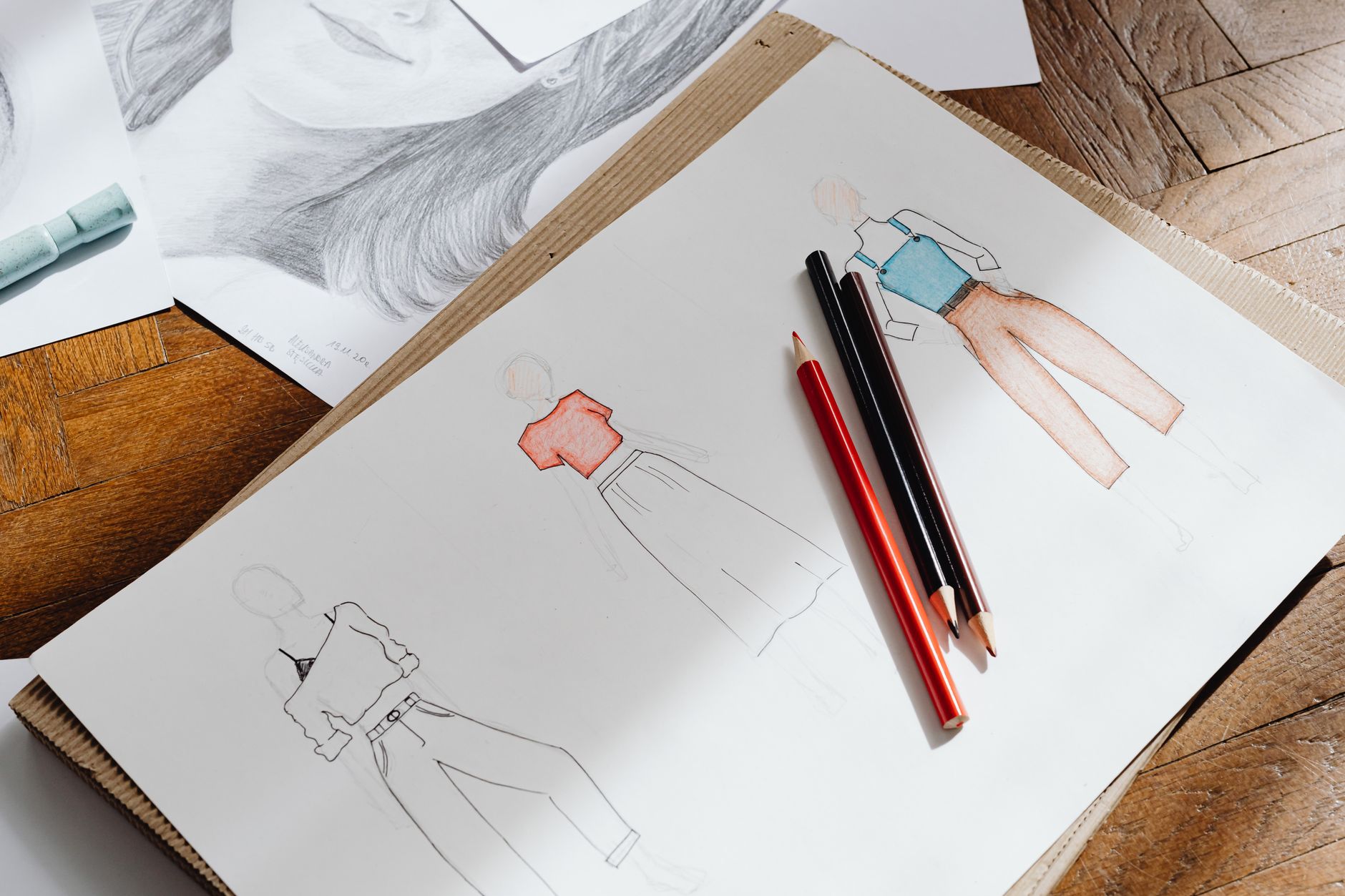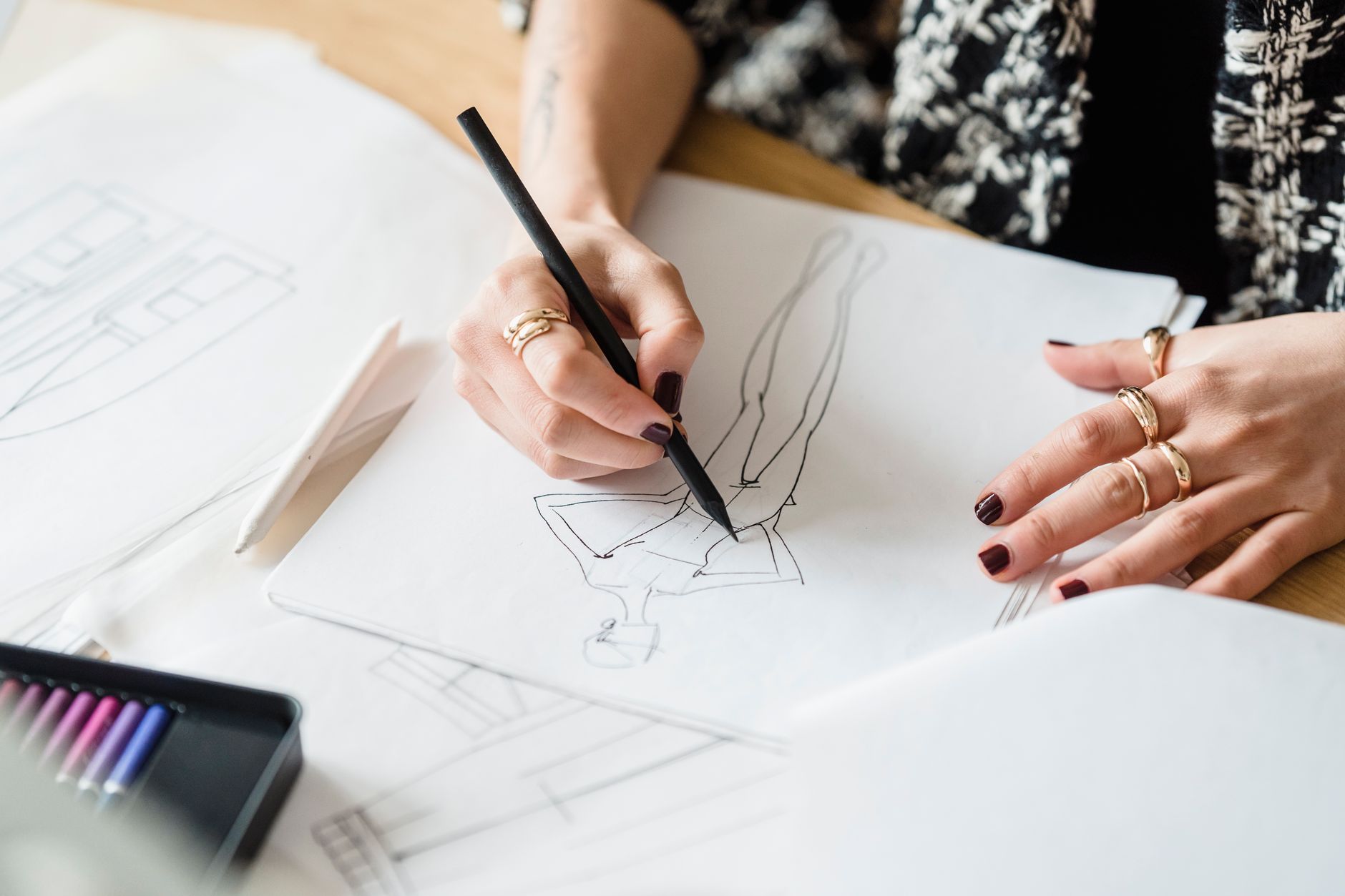
Fashion sketches are where most design work actually begins. Long before a pattern gets cut or a fabric gets ordered, there’s a drawing. Throughout history, fashion designer drawing has shifted dramatically alongside culture, technology, and the way people consume style.
Historical evolution of fashion drawing
Fashion illustration goes back further than most people realize, with artists like Albrecht Dürer producing some of the earliest known examples in the 15th century. By the late 18th century, engraved fashion plates were circulating widely, giving audiences outside Paris their first real look at couture. The publication “Le Bon Ton” in the early 20th century pushed things further, treating illustration as genuine art rather than just a catalogue tool.
The 1960s were a real turning point. Magazines like Vogue leaned hard into illustration, and artists such as David Downton began working with bold lines and deliberately exaggerated proportions. Later, as the century wound down, tastes shifted again toward something quieter and more minimal, and the sketches followed.
Tools and mediums for sketching
For most of illustration’s history, the toolkit was pretty modest: pencils, charcoal, ink, the occasional watercolor wash. Each medium has its own feel, and experienced illustrators tend to be opinionated about which suits a particular garment. Watercolor, for instance, captures drape and sheerness in a way that ink alone rarely does.
Digital tools changed the equation considerably. Programs like Adobe Illustrator and Procreate, paired with hardware like the Wacom tablet, are now standard kit for a lot of working illustrators. From what I’ve seen, plenty of professionals still sketch by hand first and then move into digital for refinement, getting the best of both approaches.
The rise of digital fashion design
Digital fashion designer drawing took off partly because of speed. Editing a color, adjusting a silhouette, or swapping a print takes seconds rather than starting over on a fresh sheet. But speed isn’t the only reason designers made the switch. Cleaner presentation and easier file-sharing with factories and buyers made the whole production conversation smoother.
Some designers have gone further, experimenting with 3D modeling software to visualize garments in virtual space before a single yard of fabric gets cut. It’s genuinely useful for reducing sampling costs and waste. I’m honestly not sure how widely adopted it’ll become at the smaller-studio level, where the software learning curve can be steep.
Influential fashion illustrators today
David Downton is probably the name that comes up most when people talk about contemporary fashion illustration. His work sits somewhere between fashion and fine art, and it’s appeared on magazine covers and in high-fashion campaigns for years. There’s a looseness to his lines that takes real confidence to pull off.
Megan Hess, sometimes described as a favorite of Anna Wintour, works in a very different register: precise, glamorous, detail-heavy. Both illustrators show that strong fashion designer drawing isn’t one thing. It can be gestural or meticulous, and the market has room for both.
Social media’s role in fashion illustration
Instagram and Pinterest genuinely changed who gets to build an audience in illustration. Before, you needed magazine placements or agency representation to get noticed. Now an illustrator can post consistently and reach thousands of potential clients directly, getting real-time feedback on what resonates. From what I’ve seen, the illustrators who grow fastest on these platforms treat them like a portfolio and a conversation at the same time.
Brands noticed, and collaborations followed. Many illustrators now partner with fashion labels to produce campaign visuals, packaging artwork, or event graphics. It’s a relationship that works well when the illustrator’s style genuinely fits the brand, and it falls flat when it feels like a mismatch just chasing reach.
The future of fashion designer drawing
Augmented and virtual reality are the obvious next frontier. The idea of placing a digital sketch into a wearable, immersive environment is compelling, and some larger houses are already experimenting with it. Whether that becomes a standard part of fashion designer drawing workflows or stays a high-budget novelty, I genuinely don’t know yet.
Sustainability pressure is probably the more immediate driver of change. Digital sampling already helps brands cut down on physical prototypes, and that’s only going to matter more as waste reduction becomes a real business priority. Traditional hand-drawing won’t disappear, though. It’s too fast, too personal, and too good for capturing an idea the moment it shows up.
FAQs
What tools do fashion designers use for drawing?
Pencils, markers, and watercolors cover the traditional side; Adobe Illustrator, Procreate, and Wacom tablets are the common digital options.
How has fashion illustration changed over time?
It moved from hand-engraved fashion plates to gestural ink sketches to fully digital workflows, tracking shifts in both technology and visual taste.
Who are the most famous fashion illustrators?
David Downton and Megan Hess are among the most recognized, each known for a distinct style that’s influenced contemporary fashion illustration broadly.